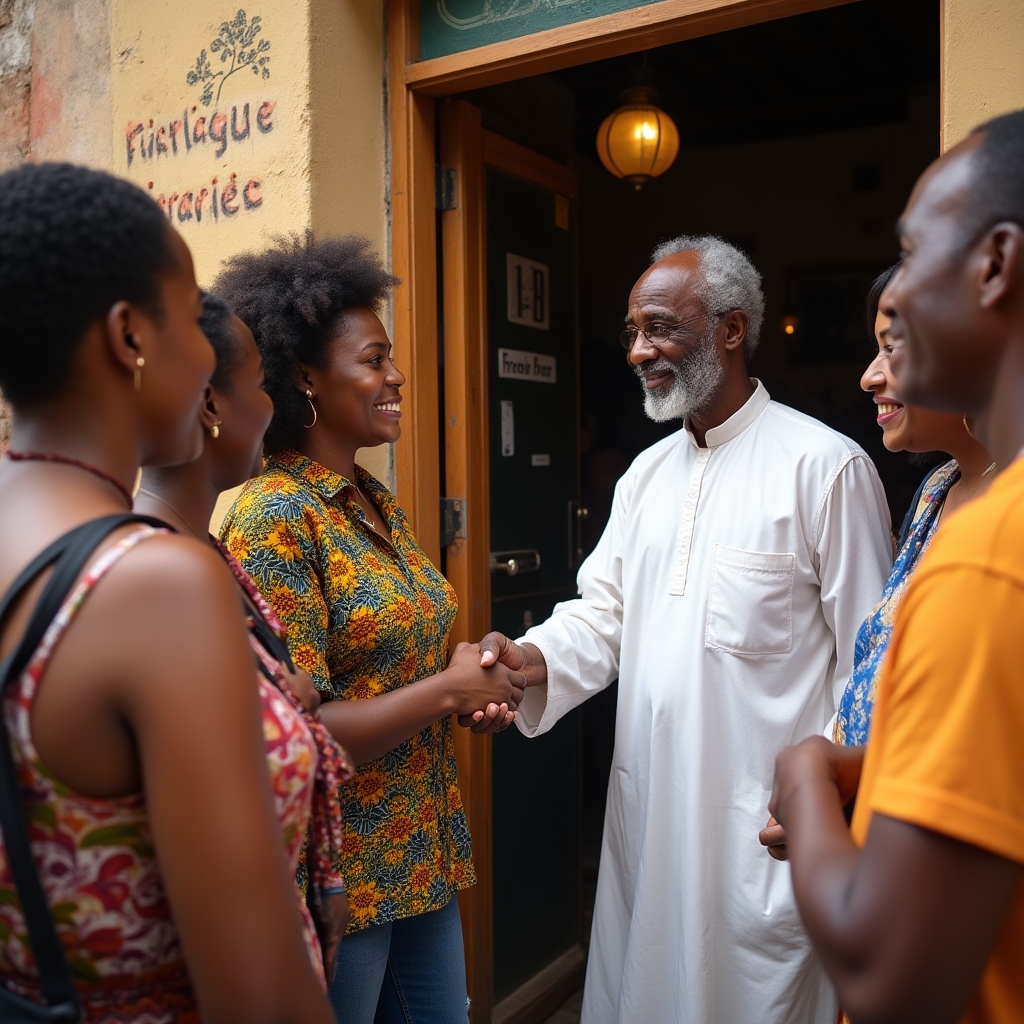
A food tour can easily become extractive. We built ours to work the other way around.
The vendors we visit didn't pay to be on our route. We chose them because the food is worth eating and the story is worth hearing. In return, we send people through their doors who understand what they're tasting and why it matters.
We've been building these relationships for years. Some of the spots on our tours have been there for decades. Others opened six months ago. What they share: ownership that cooks, recipes that traveled here from somewhere else, and a community that depends on them staying open.
Our tours exist inside living neighborhoods, not around them. We keep group sizes small so we don't overwhelm spaces that serve regular customers. We don't bring a crowd to a tiny kitchen and call it an experience. We bring eight people who want to understand, not consume.
When we bring visitors to a vendor, we're thinking about the vendor's day, not just the visitor's experience. Those two things usually align. When they don't, the vendor's day wins.
We don't hire people who simply know a lot about food. We look for people who belong to the neighborhood in some meaningful way. That might mean growing up there. It might mean spending fifteen years cooking in its kitchens. It might mean having family there. The connection has to be real.
A guide who's done research is not the same as a guide who's eaten at the same table as the person cooking your food. We insist on the latter.
We don't romanticize immigrant experience. We don't flatten complex histories into charming anecdotes. The stories we tell include hardship, displacement, economic pressure, and cultural negotiation alongside the joy and pride that also define these communities.
Food is a window into all of it. We use that window honestly.
Neighborhoods change. Restaurants close. New ones open. We walk our routes regularly and update them when something changes. We don't send participants to spots that have declined or changed ownership in ways that affect the experience. The tour you take reflects the neighborhood as it exists right now.
Every vendor on our route knows we're coming. Every owner has agreed to participate. We coordinate visit windows that work with their kitchen schedule, not against it. When something changes on their end, we adapt.
We also refer people back. Participants who want to return on their own get a printed guide with exactly what to order and when to go. We measure part of our success by how often people come back to these spots without us.
"The tour isn't the destination. The neighborhood is. We just help you find the door."
Gosago FuzudeJoin a tour and meet the communities behind the food.